
How anxiety raises blood pressure
When you feel anxious, your brain interprets the situation as a potential threat, even if the threat is just a thought. It activates the sympathetic nervous system, which launches the fight-or-flight response. Your adrenal glands release adrenaline (epinephrine) and cortisol, and several things happen at once:
- Heart rate increases, pumping more blood per minute
- Blood vessels constrict, increasing resistance
- The liver releases stored glucose for quick energy
- Muscles tense and blood flow is redirected from digestion to muscles
The result is a blood pressure spike of 10-20 mmHg systolic and 5-10 mmHg diastolic. In a panic attack, the spike can be even larger, sometimes reaching 30-40 mmHg above baseline. This is your body doing exactly what it is designed to do. The problem is that modern anxiety triggers, like a work deadline or checking your blood pressure, do not require the physical response your body prepares for.
Anxiety is one of several triggers, and this guide to sudden blood pressure spikes covers the others and when a spike needs urgent care.
Temporary spikes vs chronic elevation
| Type | Duration | BP Increase | Long-Term Risk |
|---|---|---|---|
| Situational anxiety | Minutes to hours | +10-20 mmHg systolic | Minimal if infrequent |
| Panic attack | 10-30 minutes | +20-40 mmHg systolic | Low for isolated episodes |
| White coat syndrome | During clinic visits | +10-30 mmHg systolic | May indicate future hypertension risk |
| Generalized anxiety disorder | Chronic, daily | +5-15 mmHg sustained | Moderate; may contribute to hypertension development |
| PTSD | Chronic with acute spikes | Variable, often +10-20 mmHg | Higher cardiovascular risk documented in research |
The key distinction: occasional anxiety spikes are normal and not harmful. Your cardiovascular system is built to handle them. The concern is chronic anxiety, where the stress response is activated frequently or constantly. Over months and years, repeated surges of adrenaline and cortisol can cause structural changes in blood vessels, making them stiffer and less responsive.
The blood pressure anxiety cycle
How to get accurate readings when you are anxious
If anxiety is affecting your blood pressure numbers, here is a protocol that helps:
- Step 1: Measure at home, not at the clinic. Home readings are consistently lower and more representative of your actual blood pressure for people with anxiety.
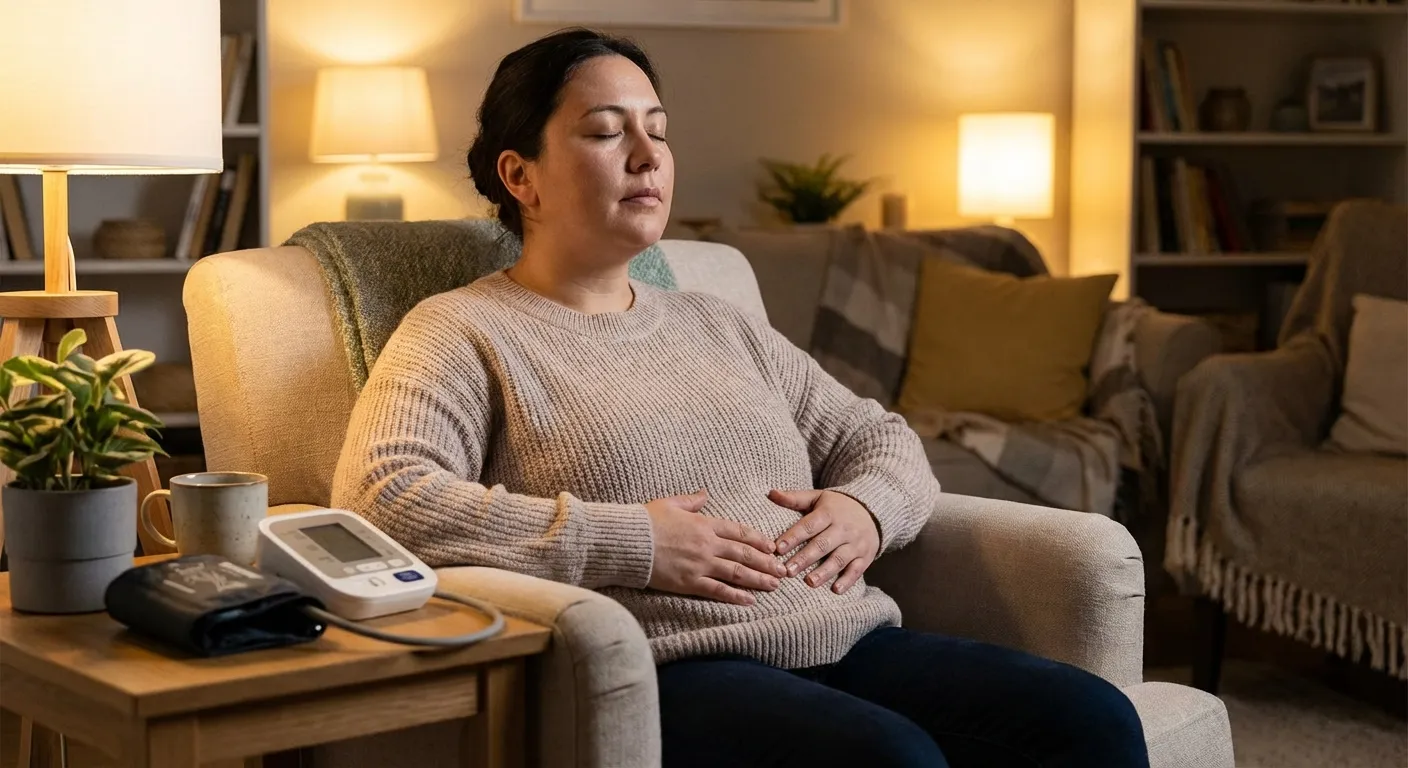
- Step 2: Sit in a quiet, comfortable spot. Feet flat on the floor. Back supported. No phone, no TV, no conversation.
- Step 3: Practice slow breathing for 5 minutes before measuring. Inhale through your nose for 4 seconds. Exhale through your mouth for 6 seconds. This activates the parasympathetic nervous system, which directly counteracts the fight-or-flight response.
- Step 4: Take 3 readings, each 1 minute apart. Discard the first one (it is usually the highest) and average the last two.
- Step 5: Do not check your reading immediately if you know it will cause anxiety. Some monitors let you cover the display during measurement. Write down the numbers and review the trend over a week rather than reacting to each individual reading.
Track these readings in a blood pressure log and bring the data to your doctor. A week of calm home readings is far more useful than a single anxious clinic measurement.
Normal blood pressure variation throughout the day
Understanding normal fluctuation helps reduce anxiety about individual readings. Blood pressure is not a fixed number. It changes constantly:
- Blood pressure is lowest during sleep (10-20% below daytime levels)
- It rises in the morning, peaking in the late morning
- A second smaller peak occurs in the late afternoon
- Eating, walking, talking, and even crossing your legs can shift readings by 5-15 mmHg
- A full bladder can raise systolic pressure by 10-15 mmHg
Day-to-day variation of 10-20 mmHg is completely normal. A reading of 135/85 one morning and 122/78 the next does not mean something is wrong. It means you are human. What matters is the average trend over time, not any single measurement.
Evidence-based ways to manage both anxiety and blood pressure
Slow breathing exercises
Controlled slow breathing (fewer than 10 breaths per minute) has been shown in clinical trials to lower systolic blood pressure by 4-9 mmHg in people with hypertension. It works by stimulating the vagus nerve, which activates the parasympathetic ("rest and digest") nervous system and reduces the fight-or-flight response. Even 5-10 minutes daily produces measurable results within 4-8 weeks.
Regular exercise
Exercise is one of the few interventions with strong evidence for reducing both anxiety and blood pressure simultaneously. A 2019 meta-analysis in the British Journal of Sports Medicine found that exercise was as effective as medication for reducing anxiety symptoms. For blood pressure, regular aerobic exercise lowers systolic by 5-8 mmHg. Aim for 150 minutes per week of moderate activity.
Cognitive behavioral therapy (CBT)
CBT is the gold standard treatment for anxiety disorders. It teaches you to recognize and reframe anxious thought patterns. Studies show CBT can reduce systolic blood pressure by 3-5 mmHg in people with anxiety-related hypertension, independent of medication.
Medication considerations
If your doctor determines you need medication, there are options that address both anxiety and blood pressure:
- Beta-blockers (propranolol, atenolol): block the physical symptoms of anxiety (racing heart, trembling) while lowering blood pressure. Propranolol is specifically used for performance anxiety and situational stress.
- SSRIs/SNRIs: Standard anxiety medications. May modestly lower blood pressure in people whose hypertension is anxiety-driven, but some (particularly venlafaxine) can raise blood pressure at higher doses.
- Blood pressure medication alone: If your blood pressure is genuinely elevated independent of anxiety, treating the BP directly may also reduce the anxiety about it by removing the trigger.
When to see a doctor
See your doctor if:
- Your home blood pressure readings are consistently above 130/80 even when calm
- Anxiety about blood pressure is significantly affecting your daily life
- You are having panic attacks with blood pressure spikes above 180/120
- You are avoiding medical appointments because of blood pressure anxiety
- You are checking your blood pressure more than 3-4 times per day out of worry
The combination of anxiety and blood pressure concerns is common, and doctors see it regularly. There is no reason to feel embarrassed. The fact that you are monitoring your blood pressure puts you ahead of most people. Track your readings at home using a hypertension tracker, bring the data to your appointment, and have an honest conversation about what the numbers look like when you are calm versus when you are not.
For more on how stress hormones affect blood pressure long-term, see our guide to cortisol and blood pressure. For a broader overview of stress management strategies, read the connection between stress and blood pressure.