
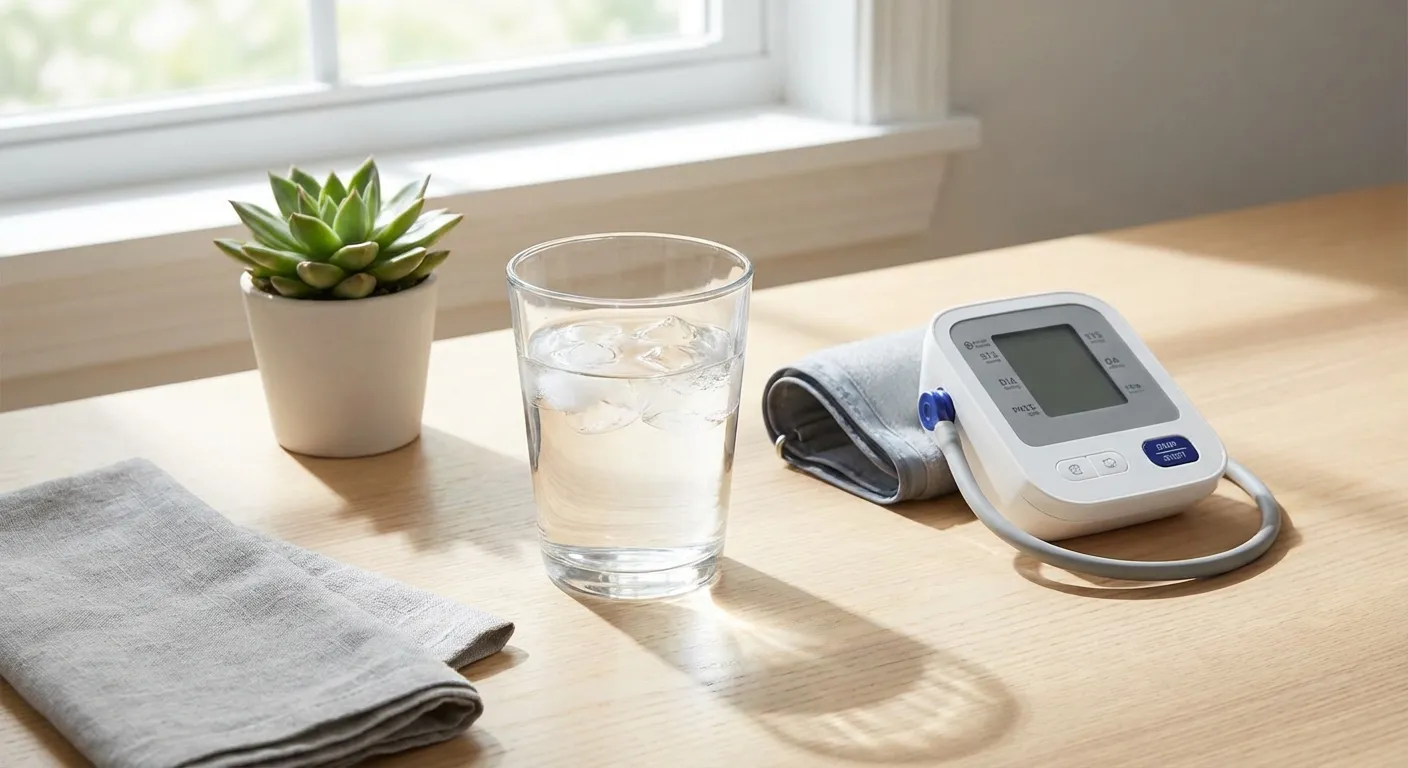
The two-way relationship between water and blood pressure
Most people assume dehydration means low blood pressure. That is part of the story, but not all of it. The relationship between hydration and blood pressure actually goes both directions, and which one you experience depends on how dehydrated you are and for how long.
| Dehydration Level | Fluid Loss | Blood Pressure Effect | Common Symptoms |
|---|---|---|---|
| Mild (1-2%) | 0.5-1.5 L | Slight decrease or no change | Thirst, dry mouth, slightly dark urine |
| Moderate (3-5%) | 1.5-3.5 L | Blood pressure drops; body starts compensating | Headache, fatigue, dizziness, rapid pulse |
| Severe (6%+) | 3.5+ L | Significant drop or paradoxical rise from compensation | Confusion, very rapid heart rate, fainting, little or no urine |
| Chronic (ongoing low intake) | Varies | Often elevated due to hormonal compensation | Persistent fatigue, constipation, recurring headaches |
How dehydration lowers blood pressure
The straightforward mechanism: your blood is about 55% plasma, and plasma is about 90% water. When you do not drink enough, plasma volume drops. Less blood volume means less pressure in the arteries. Your heart tries to compensate by beating faster, but if fluid loss is significant, blood pressure falls.
This is why dehydration is one of the most common causes of orthostatic hypotension, that dizzy feeling when you stand up quickly. Gravity pulls blood toward your legs, and without adequate volume, your body cannot push enough blood back up to your brain fast enough.
People most at risk for dehydration-related low blood pressure:
- Older adults (reduced thirst sensation and kidney function)
- People taking diuretics or multiple blood pressure medications
- Anyone with vomiting, diarrhea, or fever
- Athletes and outdoor workers in hot conditions
- People who restrict fluids due to kidney disease or heart failure
How dehydration raises blood pressure
This part is less obvious and often missed. When dehydration persists, the body activates survival mechanisms designed to preserve blood flow to the brain, heart, and kidneys:
- Vasopressin (ADH) release: The pituitary gland releases antidiuretic hormone, which tells the kidneys to hold onto water. It also constricts blood vessels directly, raising resistance and pushing blood pressure up.
- Renin-angiotensin-aldosterone system (RAAS): The kidneys detect low blood volume and trigger a hormone cascade that constricts arteries and causes sodium retention. More sodium means more water retention, which increases blood volume and pressure.
- Sympathetic nervous system activation: Dehydration triggers a stress response that releases adrenaline and noradrenaline, increasing heart rate and blood vessel constriction.
The irony: if you are chronically underhydrated and your blood pressure reads high, one part of the fix might simply be drinking more water. Not as a miracle cure, but because your body is over-compensating for low fluid intake.
Hydration and accurate readings
Blood pressure medications and dehydration risk
If you take blood pressure medication, you need to think about hydration more carefully than the average person. Some medications actively remove fluid from your body:
| Medication Type | Dehydration Risk | What to Watch |
|---|---|---|
| Thiazide diuretics (HCTZ, chlorthalidone) | High | Increased urination, electrolyte loss; worse in heat |
| Loop diuretics (furosemide, bumetanide) | Very high | Rapid fluid loss; monitor weight daily |
| ACE inhibitors (lisinopril, enalapril) | Moderate | Can cause excessive BP drop when dehydrated |
| ARBs (losartan, valsartan) | Moderate | Similar to ACE inhibitors; stay hydrated |
| Calcium channel blockers (amlodipine) | Low | Minimal direct dehydration risk |
If you take diuretics, you lose water and electrolytes (sodium, potassium, magnesium) through increased urination. In hot weather or during illness with vomiting or diarrhea, this can tip you into dehydration faster than someone not on medication. Talk to your doctor about adjusting your dose during heat waves or when you are sick.
How much water you actually need
The old "8 glasses a day" rule is a rough approximation that works for some people but not all. Your actual need depends on body size, activity level, climate, diet, and medications. Here are more evidence-based targets:
- Sedentary adults: About 2.5-3.0 liters total fluid per day (including water from food, which typically contributes 0.5-1.0 liters)
- Active adults: 3.0-4.0 liters per day, more during intense exercise or hot conditions
- Older adults: Same baseline needs but reduced thirst signals. Set reminders or keep a water bottle visible.
- People on diuretics: Ask your doctor for personalized guidance. Do not just drink extra water to "counteract" the medication without medical advice, as this can dilute electrolytes.
The urine test
Practical tips for staying hydrated
- Start each morning with a glass of water before coffee or tea
- Keep a water bottle at your desk and refill it at set times
- Eat water-rich foods: cucumbers, watermelon, oranges, berries, lettuce, soup
- Set phone reminders if you tend to forget to drink
- Drink before you feel thirsty, especially if you are over 60
- Replace fluids during and after exercise, not just after
- Monitor your intake alongside your blood pressure using a hypertension tracker to see if hydration patterns affect your readings
When dehydration is an emergency
Severe dehydration can become life-threatening, especially combined with blood pressure medication. Seek emergency care if you experience:
- Extreme dizziness or inability to stand
- Confusion or disorientation
- Very rapid heartbeat that does not slow with rest
- No urination for 8+ hours
- Blood pressure dropping below 90/60 with symptoms
- Fever above 103°F (39.4°C) with inability to keep fluids down
The bottom line
Water is not a blood pressure medication, but it is part of the equation. Dehydration throws off your readings, triggers hormonal responses that can raise pressure, and makes blood pressure medication work unpredictably. Staying consistently hydrated is one of the simplest things you can do for accurate readings and steady cardiovascular function.
If your blood pressure numbers seem inconsistent, hydration might be a factor you have not considered. Track your water intake alongside your blood pressure readings for a week and see what the data tells you. Sometimes the fix is simpler than you think.