

Why blood pressure cuff size matters
Blood pressure measurement seems simple. Wrap the cuff, press start, get a number. But if the cuff does not fit your arm correctly, that number is wrong. And not just slightly off, using the wrong size can distort your reading by 5 to 30 mmHg, which is the difference between normal and hypertensive.
The American Heart Association has been clear on this for years: cuff size is not optional, it is essential. Yet many people use whatever cuff came with their monitor without measuring their arm first. Doctors' offices sometimes do the same, defaulting to a standard cuff and applying it to every patient, regardless of arm size.
A 2023 study published in JAMA Internal Medicine found that using a regular-sized cuff on people who needed a larger size led to systolic readings that were 4.8 mmHg too high on average. For some participants, the error exceeded 10 mmHg. Using a cuff on a thin arm had the opposite problem: readings came in 3.6 mmHg lower than they should have been.
Real consequences of wrong cuff size
Too-large cuff: Falsely low readings can hide actual hypertension, delaying diagnosis and treatment. This allows silent cardiovascular damage to accumulate.
Blood pressure cuff size chart
The table below shows the standard cuff sizes used in the United States, based on mid-upper arm circumference. Cuff names may vary slightly by manufacturer, but the arm circumference ranges are consistent across clinical and consumer devices.
| Cuff Size Name | Arm Circumference (cm) | Arm Circumference (inches) | Typical User |
|---|---|---|---|
| Small Adult | 20-26 cm | 8-10 inches | Petite adults, adolescents |
| Regular / Standard / Adult | 25-32 cm | 10-13 inches | Average adults |
| Large Adult | 32-40 cm | 13-16 inches | Larger adults, some athletes |
| Extra-Large (XL) Adult | 40-55 cm | 16-22 inches | Very large arm circumference, obesity |
If your arm circumference falls on the border between two sizes, choose the larger one. It is better to use a slightly large cuff than a slightly small one, the error from a too-small cuff is more severe.
Note on international sizing
How to measure your arm circumference
To measure your arm for a blood pressure cuff, you need a flexible measuring tape (a cloth or vinyl tape measure, like those used in sewing, works best).
Step-by-step measurement instructions
- Remove clothing: Take off any thick sleeves or clothing that covers your upper arm. The measurement should be taken on bare skin.
- Relax your arm: Let your arm hang naturally at your side, relaxed. Do not flex or tense the muscles.
- Find the midpoint: Locate the bony tip of your shoulder (the acromion process) and the tip of your elbow (the olecranon process). Measure the distance between these two points and mark the midpoint on the back of your upper arm. This is typically halfway between your shoulder and elbow.
- Wrap the tape measure: Place the tape measure around your arm at the marked midpoint. The tape should be snug against the skin but not tight enough to compress the tissue. You should be able to slip one finger under the tape.
- Record the measurement: Read the measurement in centimeters. If your tape only shows inches, convert by multiplying inches by 2.54 (for example, 12 inches × 2.54 = 30.5 cm).
- Measure both arms: If there is any asymmetry (injury, surgery, lymphedema), measure both arms and use the appropriate cuff for each. Otherwise, one measurement is enough.
Once you have the arm circumference in centimeters, match it to the chart above to find your correct cuff size.
What happens when cuff size is wrong
The physics behind blood pressure measurement requires the inflatable bladder inside the cuff to compress the artery properly. If the cuff is too small, it does not distribute pressure evenly, and more pressure is required to collapse the artery, making the reading artificially high. If the cuff is too large, it overestimates the pressure distribution and underestimates the true blood pressure.
| Cuff Error | Effect on Systolic BP | Effect on Diastolic BP | Clinical Impact |
|---|---|---|---|
| Cuff too small | +3 to +8 mmHg | +1 to +5 mmHg | False hypertension diagnosis, overtreatment |
| Cuff too large | -2 to -4 mmHg | -1 to -3 mmHg | Missed hypertension, delayed diagnosis |
| Cuff loosely applied | Variable | Variable | Inconsistent readings, poor monitoring |
| Wrong arm position | Up to ±10 mmHg per 10 cm height difference | Similar | Compounded error with cuff size issues |
A 2020 analysis by GE Healthcare found that using the wrong cuff size could affect accuracy by up to 30 mmHg in extreme cases, particularly in very obese or very thin individuals. For context, a 5 mmHg systolic difference can change a diagnosis from prehypertension to stage 1 hypertension, triggering medication recommendations.
Real-world example: the obesity cuff gap
National Health and Nutrition Examination Survey (NHANES) data from 2015-2020 found that about 40% of US adults required a large or extra-large blood pressure cuff. Yet many medical offices and home monitors default to the regular size. The study authors noted that incorrect cuff sizing likely contributes to both overdiagnosis and underdiagnosis of hypertension, depending on which direction the error goes.
Wrist cuffs vs arm cuffs: when to use each
Wrist blood pressure monitors are smaller, easier to carry, and do not require removing clothing. They are popular with travelers and people with mobility issues. But there is a trade-off: wrist monitors are consistently less accurate than upper arm cuffs.
Why wrist monitors are less accurate
- Smaller arteries: The radial and ulnar arteries in the wrist are narrower and more sensitive to positioning than the brachial artery in the upper arm.
- Position sensitivity: Even a small difference in wrist height relative to the heart (5-10 cm) can change the reading by 8-10 mmHg. Most people do not hold their wrist perfectly at heart level.
- Wrist anatomy variation: Tendons, bones, and fat distribution around the wrist vary more between individuals than upper arm anatomy, affecting cuff contact and pressure distribution.
Consumer Reports testing consistently ranks wrist monitors lower for accuracy compared to upper arm devices. In their most recent evaluation, none of the wrist monitors received top accuracy scores.
When wrist monitors are appropriate
• Your upper arm circumference exceeds 55 cm and no extra-large cuff is available.
• You have an arm injury, lymphedema, or arteriovenous fistula that makes upper arm measurements inappropriate.
• You have severe obesity that makes proper arm cuff placement impossible.
If you must use a wrist monitor, bring it to your next doctor's appointment and have them validate the readings against their office device.
Choosing a home blood pressure monitor: cuff considerations
Not all home blood pressure monitors come with the same cuff. When shopping for a device, check the following:
What to look for on the product listing
- Stated cuff range: The box or product listing should specify the arm circumference range the included cuff fits (for example, "fits arms 22-42 cm"). Make sure your measurement falls within that range.
- Multiple cuff sizes included: Some monitors come with two cuffs (regular and large). This is useful for households with multiple users.
- Optional cuff availability: Check whether the manufacturer sells additional cuff sizes separately. If you are on the edge of the standard range, you may want to buy a backup large or small cuff.
- Pre-formed vs wraparound cuffs: Some cuffs are pre-formed tubes that slide onto the arm. Others are flat and wrap around. Wraparound cuffs tend to be more forgiving of sizing and positioning errors.
Recommended features for accuracy
- Upper arm design: Choose an upper arm cuff over a wrist cuff if possible.
- Validated device: Look for monitors validated to international standards (ISO 81060-2, ESH, AAMI, or FDA-cleared). Some have specific validation for use in obesity, pregnancy, or atrial fibrillation.
- Irregular heartbeat detection: Atrial fibrillation and other arrhythmias can affect blood pressure readings. Devices with irregular heartbeat indicators can alert you to potential issues.
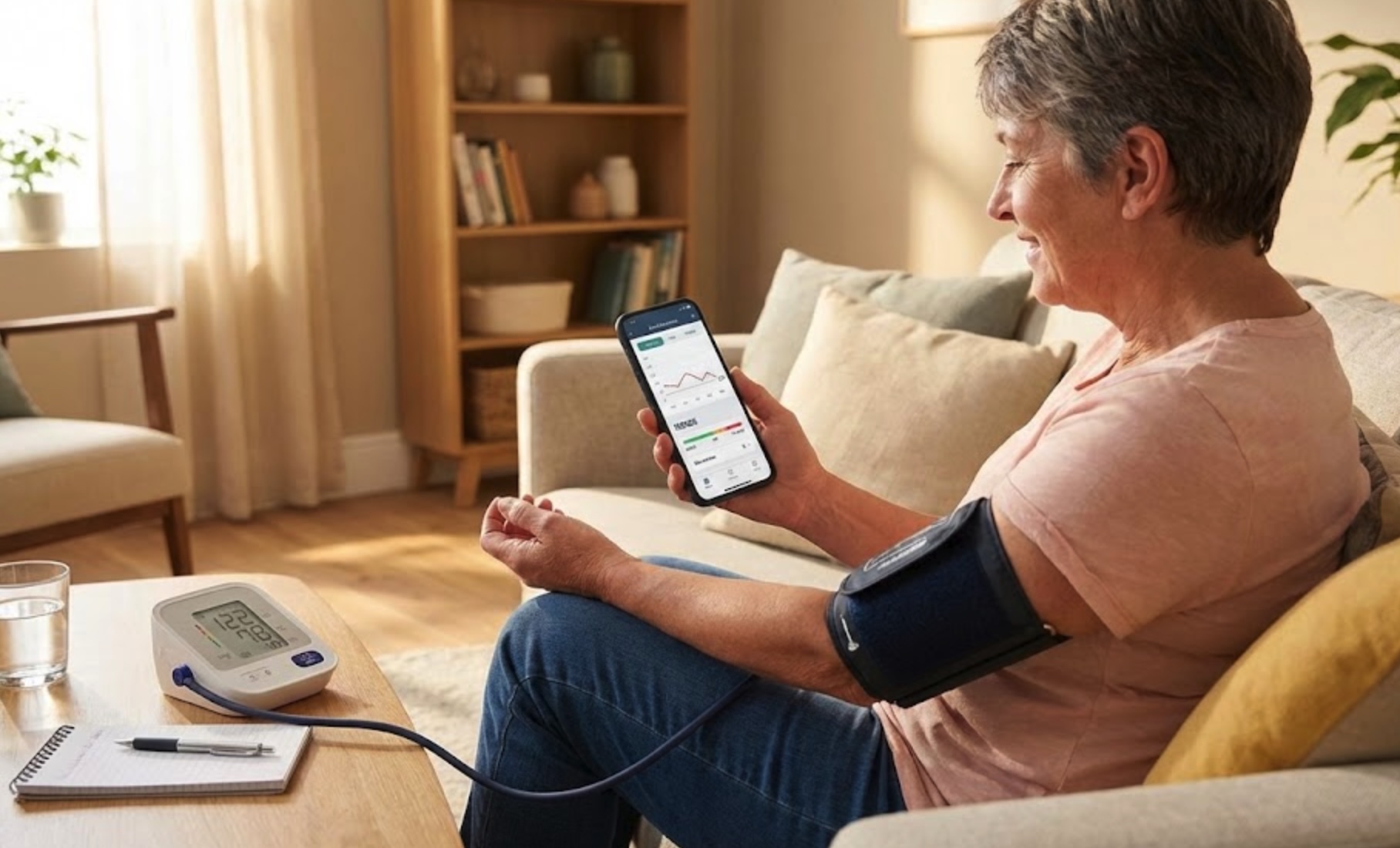
- Memory and connectivity: Built-in memory or Bluetooth sync to apps helps with consistent tracking and sharing data with your doctor. Apps like Cardilog allow you to
For more recommendations, see our guide to the best blood pressure apps and wearable blood pressure monitors.
How to properly apply a blood pressure cuff
Even with the correct size cuff, improper placement will give you bad readings. Follow these steps every time:
- Remove tight clothing: Roll up your sleeve or remove it entirely. Do not place the cuff over thick fabric.
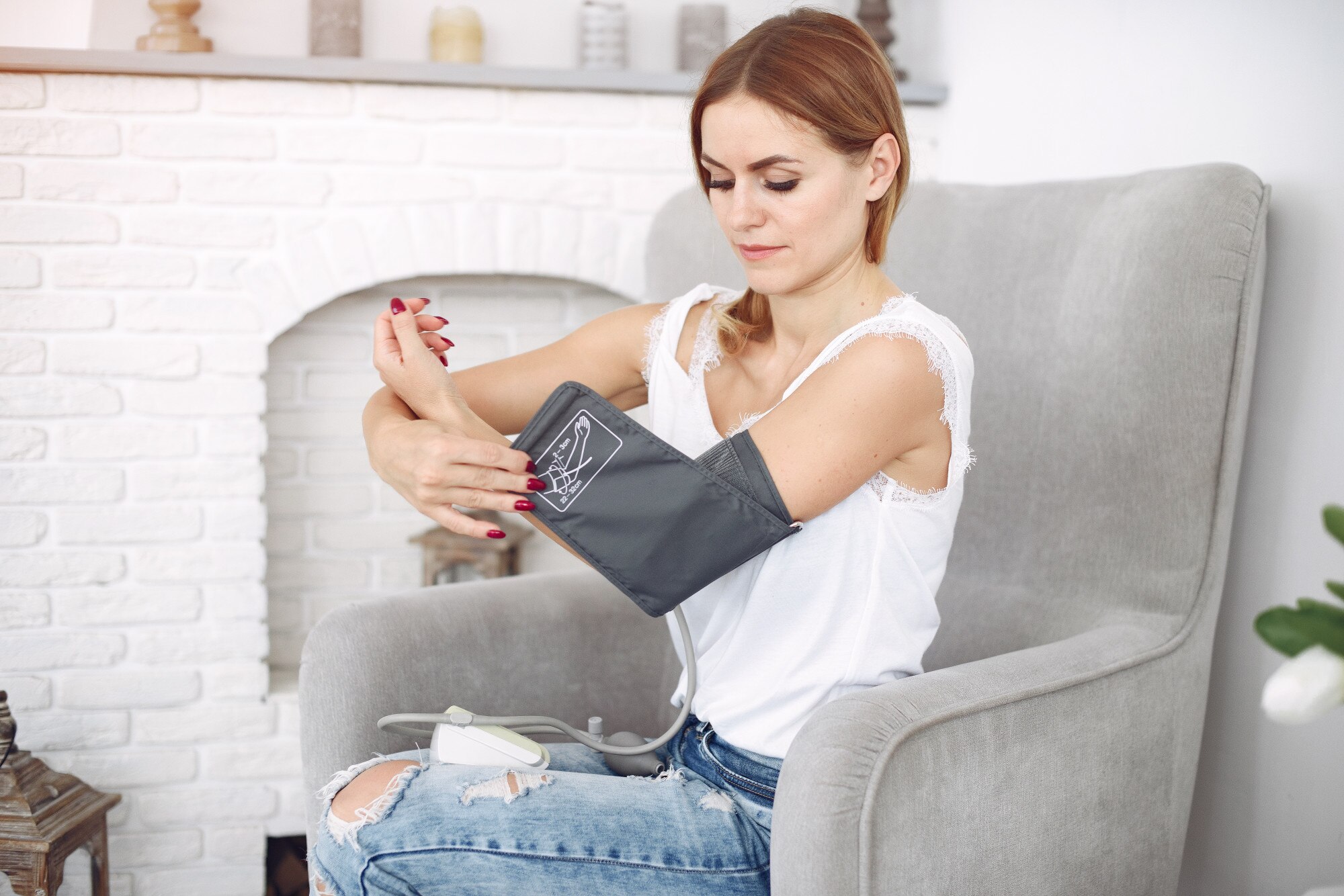
- Position the cuff: The bottom edge of the cuff should sit about 2-3 cm (1 inch) above the bend of your elbow. The center of the bladder (often marked with an artery symbol or line) should be over the brachial artery on the inside of your arm.
- Snug, not tight: The cuff should fit snugly. You should be able to slip two fingers between the cuff and your arm. If it is loose, it will move during inflation and give an inaccurate reading. If it is too tight, it may cause discomfort and distort the reading.
- Sit correctly: Sit in a chair with back support, feet flat on the floor, arm supported at heart level on a table or armrest. Do not cross your legs or talk during the measurement.
- Rest before measuring: Sit quietly for 5 minutes before taking a reading. Avoid caffeine, exercise, and smoking for at least 30 minutes beforehand.
For a full guide on technique, see our article on how to take accurate blood pressure measurements.
Special situations and cuff selection
Obesity and very large arms
If your arm circumference exceeds 50 cm, extra-large cuffs (40-55 cm range) are available from most major blood pressure monitor brands. For circumferences above 55 cm, you may need a specialized thigh cuff used on the upper arm, or a wrist monitor with physician validation of accuracy for your specific case.
Pregnancy
Blood pressure monitoring is critical during pregnancy due to the risk of gestational hypertension and preeclampsia. Arm circumference can increase during pregnancy due to fluid retention. Measure your arm and choose cuff size accordingly, even if this means switching from a regular to a large cuff mid-pregnancy.
Athletes and muscular arms
Muscular arms with low body fat can require a large cuff even if the person is not overweight. The arm circumference measurement does not distinguish between muscle and fat, it only measures total diameter. Measure and choose based on the number, not assumptions about body composition.
Arm injury, surgery, or lymphedema
If you have had a mastectomy, lymph node removal, arm injury, or arteriovenous fistula (for dialysis), do not measure blood pressure on that arm. Use the opposite arm. If both arms are affected, consult your doctor. In rare cases, leg or forearm measurement may be recommended.
Printable cuff size reference
For quick reference at home or when purchasing a monitor, save or print this simplified chart:
| Arm Size (cm) | Arm Size (inches) | Cuff Size Needed |
|---|---|---|
| 20-26 cm | 8-10 inches | Small Adult |
| 25-32 cm | 10-13 inches | Regular / Standard |
| 32-40 cm | 13-16 inches | Large Adult |
| 40-55 cm | 16-22 inches | Extra-Large |
Keep this chart with your blood pressure monitor and re-measure your arm every 6-12 months or if your weight changes significantly.
The bottom line
Blood pressure cuff size is not a minor detail. It directly affects the accuracy of every reading you take. A measurement error of even 5 mmHg can change a diagnosis, influence treatment decisions, and alter your understanding of your cardiovascular health.
Measure your arm, match it to the chart, and make sure your monitor fits you. If you are using a cuff from a doctor's office, ask them to confirm they are using the correct size for you. If you are buying a home monitor, check the cuff range before you purchase.
Accurate measurement starts with the right cuff. Get that part right, and the rest of your blood pressure tracking will follow.